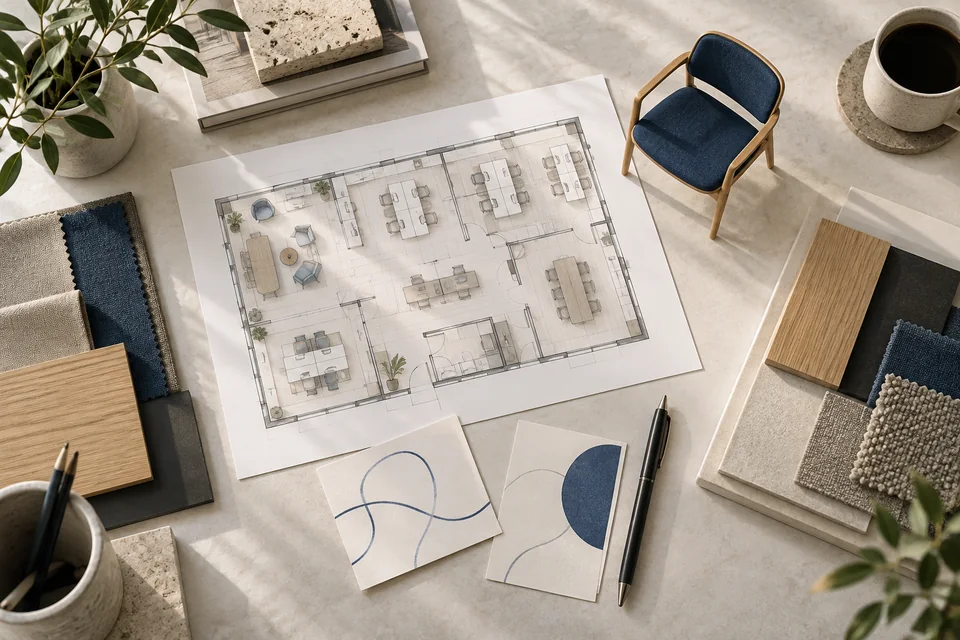
Understand how the space will be used
Ask how many people need permanent workstations, how often they attend, and what shared spaces they need. A headcount alone does not describe the furniture requirement. Record meeting-room capacity, storage needs, and whether the customer wants focused work areas or collaborative seating. Ask for a current floor plan and distinguish measured dimensions from estimates.
Put the commercial boundaries in writing
Clarify whether the budget covers furniture alone or also delivery and installation. Ask about the target date and whether it is a preference or a fixed dependency. Record who will review the layout, who approves the spend, and whether another stakeholder needs a separate presentation. Keep these answers next to the brief so revisions remain grounded in the same assumptions.
Ask focused follow-up questions
When a brief is incomplete, ask for the missing decision rather than sending a long questionnaire again. For example: “Does the budget include installation?” is easier to act on than “Please provide more project information.” Keep confirmed requirements, open questions, and proposed assumptions in separate fields.
Finish with a shared summary
Send a concise recap: the space, furniture categories, quantities to explore, budget basis, preferred finishes, timing, and outstanding information. Ask the customer to correct it before detailed proposal work begins. Revisit this summary when the brief changes, rather than relying on an old email thread.